


If You Rear-End Someone, Is It Always Your Fault in Florida?
Direct Legal Answer: As experienced Florida Personal injury attorneys whom residents trust, we clarify that under state law, there is an initial presumption that the trailing driver is negligent in a rear-end collision; however, this presumption is fully rebuttable. If the lead driver made an arbitrary sudden stop, cut off the trailing car, or operated with non-functional brake lamps, liability shifts under Florida’s 51% comparative fault bar.
When catastrophic collisions occur on our roadways, finding proven Florida personal injury attorneys whom motorists rely on is the first step toward true accountability. Almost every driver has heard the myth repeated at accident scenes: “If you rear-end someone, it’s always your fault.”


Florida’s Rebuttable Presumption: Why Fault Isn’t Automatic
Under longstanding Florida Supreme Court precedent and the uniform traffic code (Florida Statute § 316.0895), a rebuttable presumption of negligence initially attaches to the rear motorist. The legal framework assumes the trailing vehicle failed to maintain an assured safe following distance.
However, “rebuttable” means it is merely an evidentiary starting point—it can be legally dismantled with verifiable physical and digital evidence. Florida appellate courts recognize three key scenarios where the rear driver is cleared of sole liability:
- Arbitrary Sudden Stop: The lead vehicle slammed on brakes unexpectedly in an area where no reasonable motorist would foresee a sudden halt (such as on an open highway on-ramp or a fast-moving lane with no forward obstructions).
- Sudden Cut-Off / Unsafe Lane Change: A motorist aggressively swerved directly in front of your bumper, erasing the safe stopping distance milliseconds before stopping.
- Defective Mechanical Equipment: The forward vehicle operated at dusk, dawn, or night without functional taillights or illuminated brake lamps.

The 51% Comparative Fault Rule: Why Insurance Adjusters Blame You
Understanding this rule is essential for our Florida personal injury attorneys to protect your compensation. Under Florida Statute § 768.81, Florida enforces a modified comparative fault standard with a strict 51% bar:
- If you are assigned 51% or greater fault: You are legally barred from recovering a single penny from the other driver’s insurance carrier.
- If you are assigned 50% or less fault: You retain the legal right to collect financial compensation, reduced strictly by your percentage of responsibility.
Insurance adjusters intentionally tell drivers “if you rear-end someone, it’s always your fault” to push your liability to 100% on the initial paperwork, avoiding payouts for emergency care, lost wages, and surgical bills.
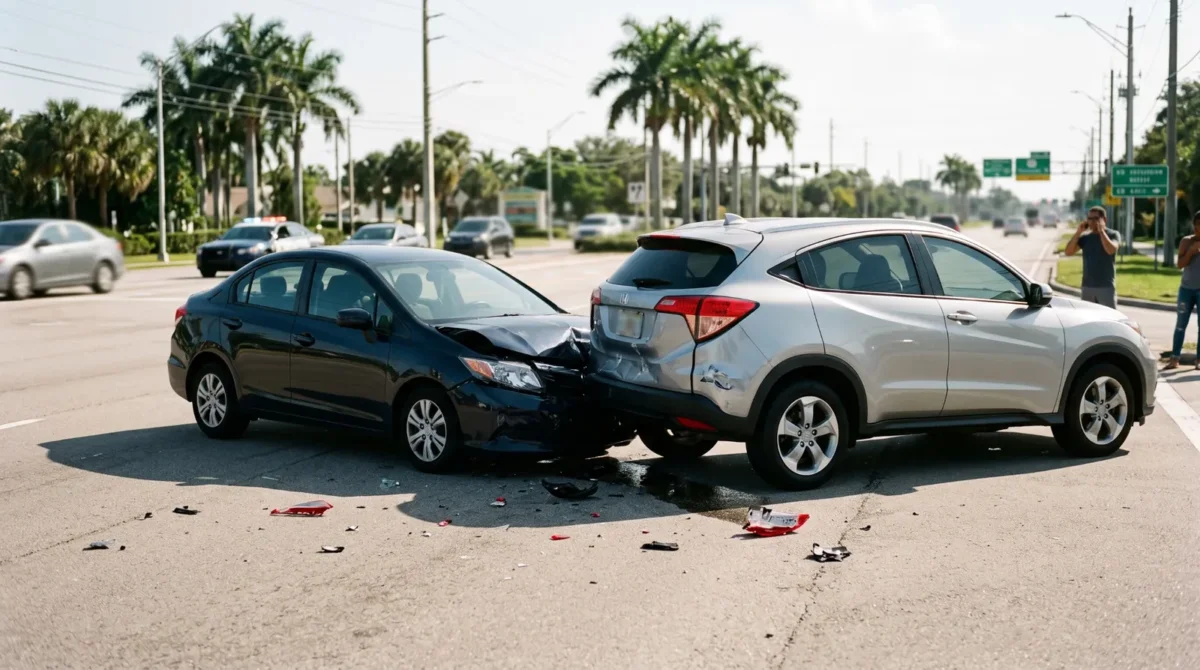
Rear-End Crash Scenarios: Who Really Pays in Florida?
| Accident Scenario | Initial Legal Presumption | Evidentiary Outcome in Florida Courts |
|---|---|---|
| Distracted Driving / Texting | Rear driver presumed at fault | Rear driver liable: Failure to maintain safe braking distance. |
| Arbitrary Sudden Highway Stop | Rear driver presumed at fault | Presumption rebutted: Lead driver held liable for reckless road obstruction. |
| Sudden Cut-Off / Swoop & Squat | Rear driver presumed at fault | Lead driver liable: Unsafe lane change violating trailing driver’s right-of-way. |
| Burned-Out Brake Lamps | Rear driver presumed at fault | Comparative fault: Lead driver shares substantial fault for inoperable safety lights. |
| Multi-Car Chain Reaction | Last trailing vehicle | Shared liability: Forensic timeline determines exact sequence of impacts. |
Do These Rules Change in Fort Lauderdale, Tampa, or Sarasota?
No. The rear-end presumption comes from Florida Supreme Court case law, and the 51% comparative fault bar is state law (§768.81) — both apply identically in Fort Lauderdale, Tampa, and Sarasota. What changes is the local crash volume: in 2024, Broward County recorded 38,338 total crashes, Hillsborough County 26,269, and Sarasota County 6,952 (FLHSMV, 2024 Traffic Crash Facts Annual Report). Those are total crashes of all types, not rear-end crashes alone. Justice Law handles rear-end cases from its offices in Plantation, Tampa, and Sarasota.
Florida Personal Injury Attorneys: Overcoming False Presumptions
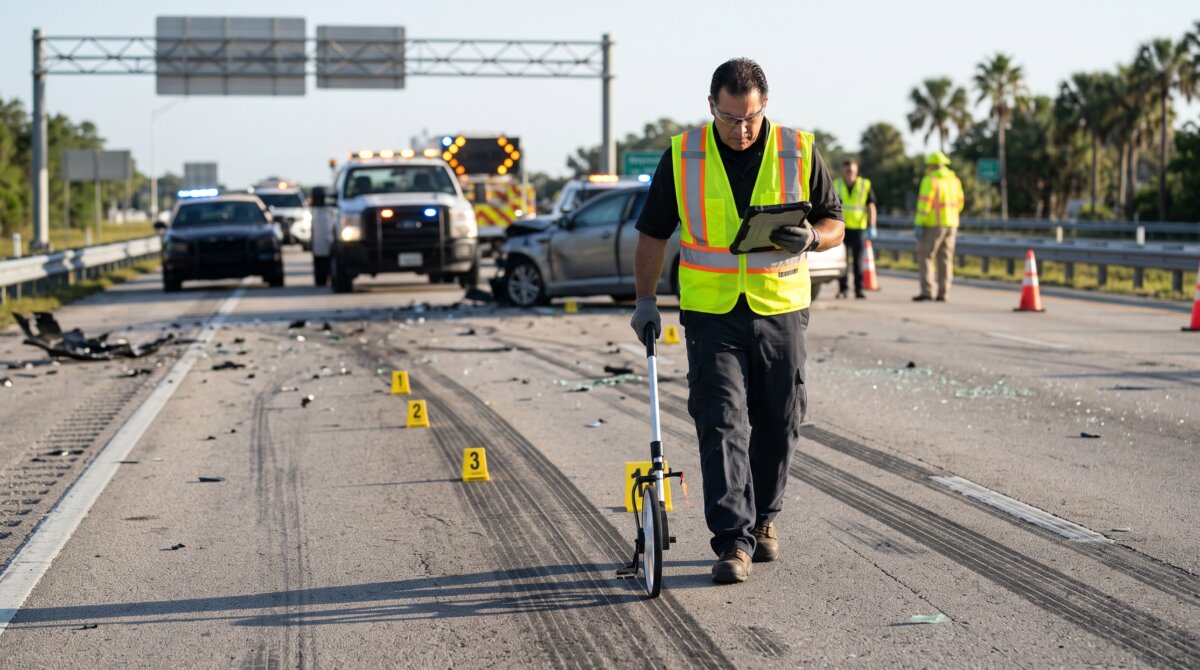
Overcoming an unfair rear-end fault determination requires securing physical and digital evidence within hours of the crash:
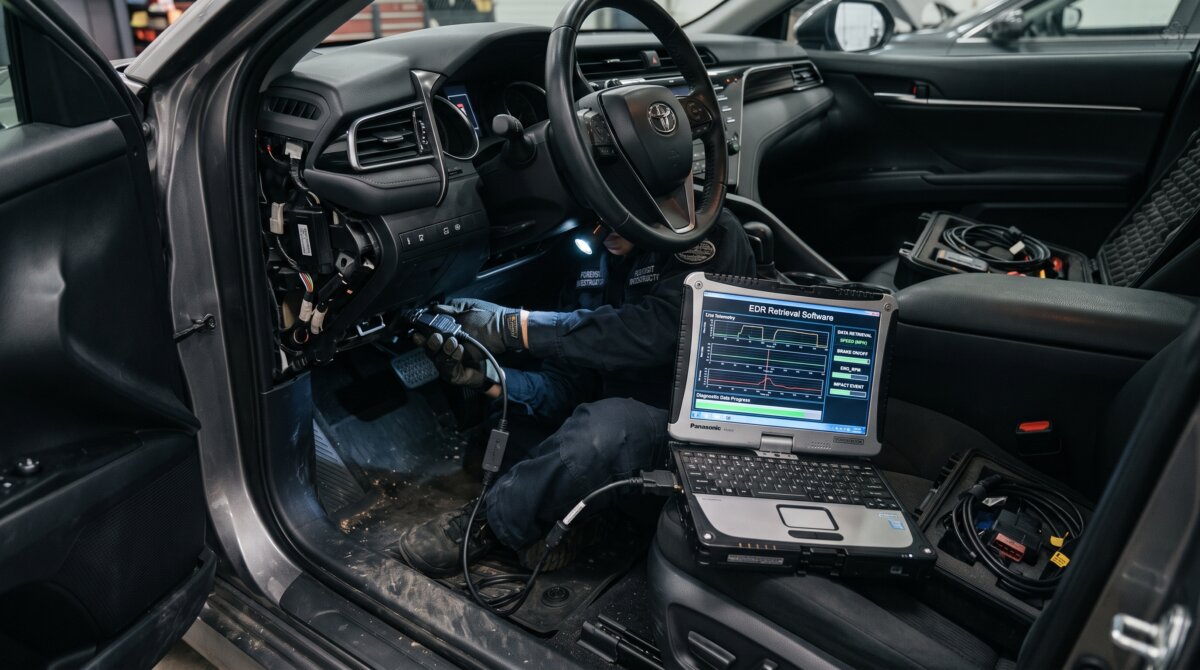
- Event Data Recorder (EDR) Downloads: Extracting vehicle black box diagnostics proving exact speed, steering angle, and brake pedal engagement timing.
- Traffic Camera & Dashcam Audits: Subpoenaing municipal street camera footage and nearby commercial security feeds before they loop and erase.
- Bulb Filament Forensics: Analyzing the tungsten bulb filaments of the lead car to establish under a microscope whether brake lights were powered or dark at the moment of impact.

Statewide Legal Powerhouse
- South Florida: 8551 W Sunrise Blvd. Plantation, FL 33322
- Gulf Coast (Sarasota): 49N East Avenue, Sarasota, FL 34237
- Tampa: 14502 N. Dale Mabey Hwy Suite 200 Tampa, FL 33618
Call 24/7: 954-515-5656
Legal Review & Authorship
This legal guide was reviewed and approved by the personal injury attorneys at Justice Law. Led by attorneys Cam Justice, L. Bruce Jonas, Esq., and Adam D. Breit, Esq., the firm represents accident victims across Florida. If you have been injured by a negligent rider or driver, contact us for a free consultation.
The images appearing in this publication are dramatizations and illustrative reenactments created solely for editorial purposes. They do not depict actual crash scene evidence, judicial case records, or the individuals involved, in strict observance of confidentiality and out of respect for the victim’s family. Past case results and jury verdicts do not guarantee, warrant, or predict a similar outcome in future legal matters.

