


1. Crash Reporting Threshold Raised to $2,000
Perhaps the most impactful procedural shift for injury litigators and drivers is the adjustment to Florida’s mandatory collision reporting threshold. Under previous statutes, motorists were legally obligated to notify law enforcement of any crash resulting in apparent property damage of at least $500. Under the new Florida driving laws October 2026, this threshold quadruples to $2,000.
While designed to relieve municipal police departments and Florida Highway Patrol (FHP) units from minor fender-benders, this change poses significant hazards for motorists. Hidden structural damage and late-onset soft-tissue trauma often exceed thousands of dollars days after a crash. Even if visible vehicular impact appears minimal, demanding a formal police crash report remains the single most reliable method to document liability, exchange insurance details, and avoid comparative negligence claims.
2. License Plate Bracket & Frame Legality Clarified
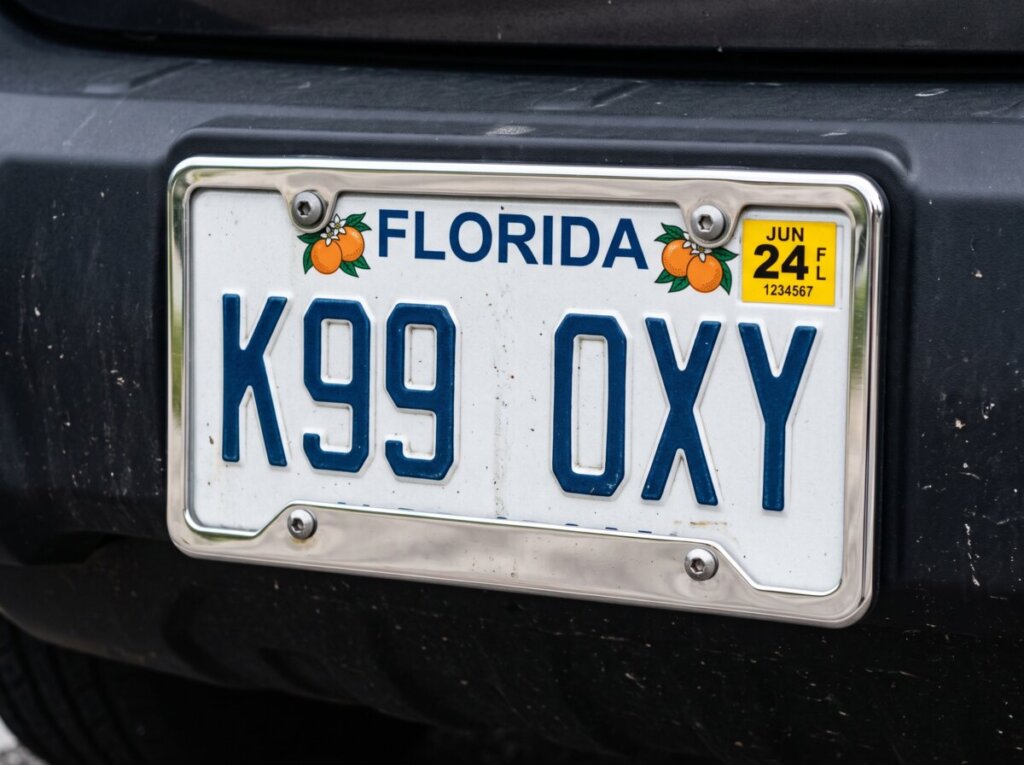
For years, ambiguous enforcement around license plate borders led to contentious traffic stops across Florida municipalities. The 2026 regulatory framework codifies that decorative license plate frames or dealership brackets are officially lawful, provided they do not obstruct or obscure the alphanumeric characters, registration decal validation stickers, or the jurisdiction name. Drivers can no longer be subjected to pretextual traffic stops solely for possessing standard aftermarket frames that leave all critical identification features visible.

3. Stricter Vehicle Registration & Legal Presence Mandates
The statutory updates establish rigorous documentary hurdles for initial vehicle registrations and title transfers. Motorists registering motor vehicles must furnish verified proof of residential address and affirmative documentation of lawful presence in the United States. Acceptable credentials include valid REAL ID-compliant driver’s licenses, unexpired U.S. Passports, or valid foreign passports accompanied by federal Form I-94 arrival/departure records. Failing to provide compliant documentation halts registration renewals and risks severe administrative penalties.

4. Digital Notifications from FLHSMV
Transitioning administrative mechanisms toward modern electronic infrastructure, the Florida Department of Highway Safety and Motor Vehicles (FLHSMV) is officially authorized to deliver crucial legal notices via email. This includes registration expiration reminders, mandatory license suspension warnings, and insurance lapse notices.

Because drivers are legally presumed to have received proper service once digital correspondence is transmitted to their designated email address, ensuring your contact records remain accurate with the state portal is crucial to avoid unknowingly driving with a suspended license.
5. Modernized Electronic Licensing for Commercial Motor Carriers
The legislation replaces traditional paper-based motor carrier registration with an integrated mandatory digital licensing framework. Commercial fleet operators and logistics companies must comply with automated electronic auditing, enhancing statewide oversight of commercial trucks and freight vehicles sharing Florida highways.
Protecting Your Insurance Rights Under Florida Traffic Revisions
Whenever traffic rules undergo major structural amendments, insurance providers frequently seek new loopholes to deny coverage or minimize bodily injury payouts. If you are involved in a collision under the new Florida driving laws October 2026, do not rely on informal agreements at the scene—always request emergency services, document property damage thoroughly, and seek medical treatment within 14 days to preserve your Personal Injury Protection (PIP) benefits.
Our courtroom trial litigators operate in strict accordance with professional standards established by The Florida Bar. For practical analysis on negligence, highway liability, and driver defense, visit our Florida Legal News & Guides Hub.


